If you have been reading market updates about San Antonio in 2026, you have seen the same headline in a dozen versions. Median price around $295,000 as of May, days on market around 50, inventory climbing, sellers negotiating. The word "balanced" gets used a lot. It is accurate, and it is also the least useful thing you can know about the market right now.
The number that actually decides what your Cibolo three-bedroom sells for this summer is not the citywide median. It is the monthly payment a builder three miles up the road is quoting on a brand-new house with a 4.99% rate. That comparison, not the comp down the street, is where the real repricing is happening.
The headline data, and why it undersells the story
Start with the surface. SABOR reported a May 2026 median of about $295,000, roughly 4.5% above the same month last year on a Texas REALTORS basis. Homes sat about 50 days on the market, and new listings across the metro surged 39% from February to March, the sharpest inventory jump of any major Texas metro.
Read those three numbers together and you would guess San Antonio is drifting into a gentle buyer's market with prices flat. That reading is not wrong. It is just aggregated so hard that the mechanism disappears.
The San Antonio Report captured the divergence in March: houses were spending about 102 days on the market on a broader metro basis, roughly 20% longer than the year before, but the median kept nudging up because more expensive homes were making up a larger share of what actually closed. SABOR Chair Ed Zapata pointed to the same effect. More homes selling at higher price points pull the median up even as demand thins underneath.
Translation: the "flat median" is partly a mix-shift illusion. The homes still moving skew higher. The homes sitting are stacked in a specific band, and there is a specific reason.
Where the builder pressure is concentrated
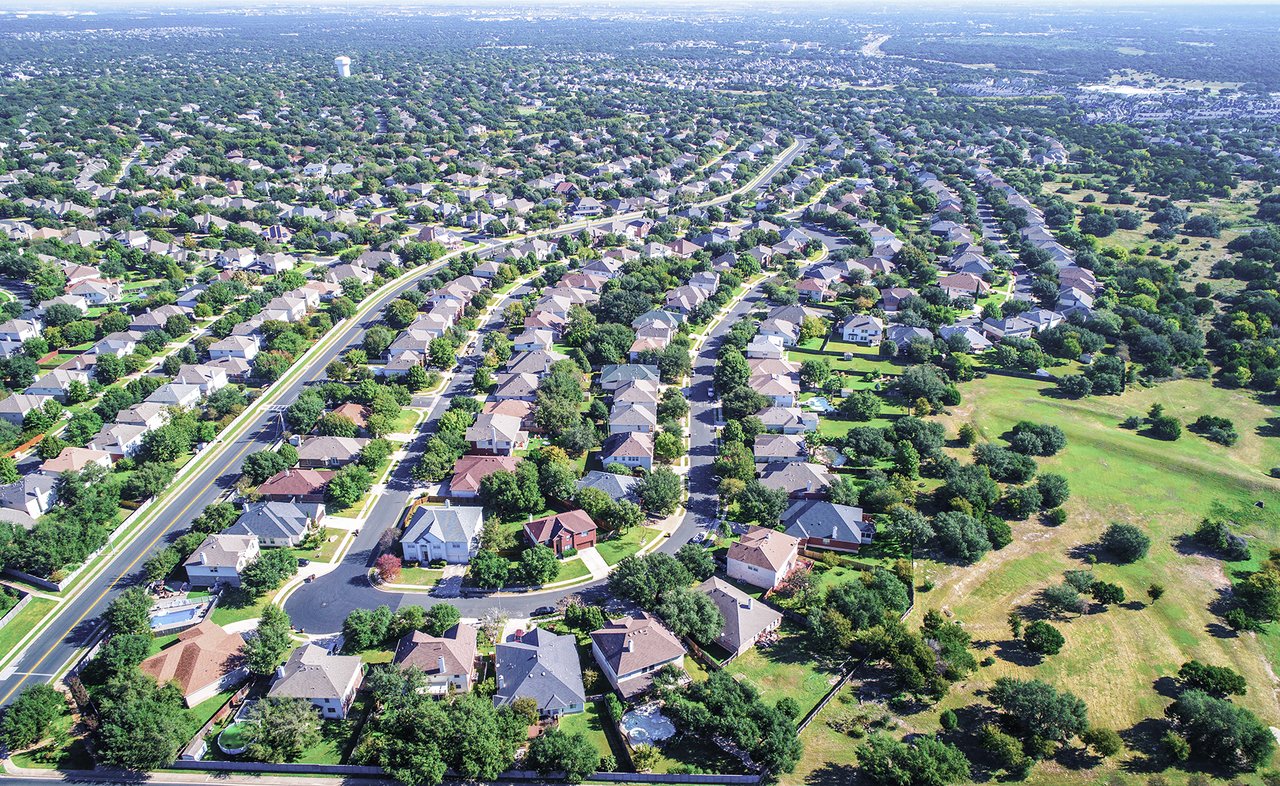
New construction in San Antonio is not evenly distributed. It is stacked along three corridors: the 1604 loop, Highway 281 north, and I-35 South toward Schertz and Cibolo. National builders including D.R. Horton, Lennar, and Meritage Homes are operating at scale in these bands, delivering hundreds of homes per quarter.
The submarkets carrying the most builder exposure right now:
- North and Northwest inside 1604: Stone Oak, Alamo Ranch, Timberwood Park, Kinder Ranch. Resale price bands roughly $320,000 to $420,000.
- I-35 North corridor: Schertz, Cibolo, Cibolo Canyons. Heaviest concentration of active 2-1 and permanent buydown offers.
- Far West and Southeast growth edges: Helotes at roughly $415,000 median, plus far-south communities where new starts still open in the mid-$200s.
- Near JBSA installations: Communities feeding Fort Sam Houston, Lackland, and Randolph, where VA buyers stack builder incentives with zero-down financing.
The prime inner ring, Alamo Heights around a $445,000 median, Terrell Hills, Olmos Park, Monte Vista, is largely insulated from this pressure. There is no builder delivering fifty new homes a quarter next door. Comps there behave like a different market because, in practice, they are one.
The payment math that resets your comp
Here is where the mechanism turns concrete. Builders are offering permanent rate buydowns as low as 4.99%, plus closing cost credits, on inventory homes that need to move. Resale buyers financing at market rates in the low- to mid-6% range are looking at the same monthly budget and doing the arithmetic.
A rough side-by-side on a 30-year fixed, principal and interest only:
Scenario | Price | Rate | Monthly P&I |
|---|---|---|---|
New build with builder buydown | $450,000 | 5.25% | ~$2,485 |
Resale, market rate | $420,000 | 6.75% | ~$2,724 |
Resale needed to match payment | ~$385,000 | 6.75% | ~$2,497 |
The resale home is nominally $30,000 cheaper. On a monthly basis it is roughly $240 more expensive. To match the builder's payment, the resale seller has to give up another $35,000 in list price, or spend a comparable amount funding a seller-paid rate buydown at closing.
That is the hidden reset. The median in your ZIP looks flat because the closed sales already reflect this compression. The listings that refuse to price in the builder's payment sit at 60, 90, 120 days. Recent SABOR-based reporting noted that more than half of active listings in San Antonio had been on the market for at least 60 days earlier this year.
The competition for a resale home in a builder-heavy corridor is not the house on the next block. It is the monthly payment on an inventory home the builder needs to close by quarter-end.
Why sub-$300K is a different market than $600K
The two-speed pattern shows up again inside the price tiers. Zapata and other SABOR-side commentators described homes under $300,000 as the segment losing demand fastest, because those buyers are the most rate-sensitive and the least able to absorb closing costs. Wealthier buyers hold more equity, feel rates less, and are transacting closer to normal.
Layer builder behavior on top of that. South San Antonio, roughly $180,000 to $240,000, has almost no new construction competition and instead sees heavy investor and cash-buyer activity around Brooks and older stock south of downtown. Resale sellers there are competing with cash offers on condition, not with builders on payment. Meanwhile, the $320,000 to $420,000 band in the North and Northwest is where builder pressure is at its peak and resale sellers have the least room to hold list price.
Anyone using a citywide "days on market went up, median went up" summary to price a specific home is averaging across four different games.
If you are selling in a builder-heavy corridor
The single most useful move is to model the buyer's monthly payment against the closest new-construction alternative before you set list price. That means pulling the current builder incentive sheet in your community, not last quarter's, and running the payment on the specific inventory homes that are your true competition.
From there, the choice is usually between a price cut and a seller-funded buydown. On paper a $15,000 credit toward a rate buydown often moves the buyer's monthly payment more than a $20,000 price reduction, and it preserves your comp for the neighbors. Model both. Bring the numbers to the listing conversation with your agent instead of anchoring on what the house across the street closed for in 2022.
The resale advantages that still travel well against a new build are established trees, larger lots, finished landscaping, no lot premium, no design-center upcharges, and immediate occupancy without a six-to-ten-month build timeline. Those are worth highlighting in the listing rather than assumed.
If you are buying
Do not evaluate resale and new construction on price alone. Ask every builder community you tour for a full incentive disclosure in writing, including whether the advertised rate requires their preferred lender, which specific inventory homes qualify, and how long the rate lock holds. Then have an independent lender quote the same loan without the builder package. The gap between those two quotes is the real incentive.
On the resale side, sellers who have been sitting past 60 days are usually the ones now open to a rate-buydown concession. That conversation goes better if you arrive with a specific number tied to a specific payment target, not a generic ask for "help with closing costs."
VA buyers moving on a PCS timeline to Fort Sam Houston, Lackland, or Randolph have the widest set of tools right now. Builder incentives generally stack with VA loans, and quick-move-in inventory homes can close inside the window between report date and occupancy. That combination is one of the few places in the 2026 market where the buyer holds both leverage and speed.
FAQ
Is the citywide median actually a good number to price against? Only if the home is in a submarket with light builder exposure, such as the inner prime ring. In any corridor with active new construction, the more useful anchor is the payment on the closest builder inventory home, not the median.
Are builder buydowns a sign the market is weakening? Not on their own. Builders use incentives to protect base pricing and move quarter-end inventory in strong and soft markets alike. What is different in 2026 is that the incentives are aggressive enough to reshape how nearby resale is priced.
Do these dynamics apply in New Braunfels, Boerne, or the Hill Country edge? Directionally yes, wherever production builders are active. The specific price bands and rate offers vary, and the sub-$300K segment barely exists in some of those markets, so the pressure lands differently.
If you are trying to price a home in a builder-heavy corridor, or trying to decide between a resale offer and a new-construction contract with an incentive sheet you cannot fully decode, that is exactly the conversation to have with a local agent before you commit. JBGoodwin REALTORS® has been working these submarkets for over fifty years, and our San Antonio team can model the payment comparison against the specific community you are looking at. Contact Us when you are ready to run the numbers on your address, not the metro average.